TUTORIALS:

|
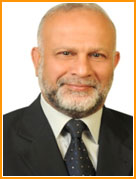
Dr. Kyungho Chung
website:
email: khc@kisa.or.kr
Vice president of Korea Internet & Security Agency (KISA)
and in charge of Information Security Group (South Korea)
|
TITLE: "User Perspective of Security and Privacy Technology: Usability Design for Security"
ABSTRACT:
The conventional definition of information security has only related to the confidentiality, integrity. However, one the apparent failure of information security stem from the failure of usability. The lack of an understandable conceptual model, security will be always hard to understand for users and administrators. A new approach in designing security and usability for information technology is needed.
ABOUT THE SPEAKER:
Dr. Kyungho Chung is an executive vice president of Korea Internet & Security Agency (KISA) and in charge of information security group. He majored Industrial and Systems Engineering and received the B.S. degree from Hanyang University, the M.S degree from Seoul National University, and the Ph. D. degree from Virginia Polytechnic Institute and State University. He also served as a information security project manager of Korea Communications Commission (KCC) from 2009 to 2011. He has involved many national R&D projects for cyber security and long-term IT strategies.
TITLE: "Establishing the Cyberspace Security Strategy"
ABSTRACT:
Although one keeps hearing about the term Cyberspace, one has a hard time to find a proper explanation of it. Gibson was the first to coil the term Cyberspace in his celebrated science fiction novel Neuromancer in 1984 (Gibson 1984). Ottis defined it as “a time-dependent set of interconnected information systems and the human users that interact with these systems.” (Ottis 2010).
While we are having difficulties in defining the subject, providing a full-fledged cyberspace security strategy seems to be even harder.
The creation of a cyberspace security strategy usually starts with determining the strategic objectives followed by the definitions for a road map.
With this tutorial, it is aimed to provide a broad perspective for Cyberspace and its related problems like cyber terrorism, cyber warfare, cybercrime to the audience first.
Then an anatomy of a cyberspace security strategy will be disclosed with the purpose of providing detailed information to the audience as to how to create one by examining the already publicized cyberspace security strategies of some 23 different countries.
By the end of this tutorial, the audience will be more knowledgeable about the issues of cyberspace security and to remedy them with a national level cyber security strategy.
ABOUT THE SPEAKER:
Dr. Koltuksuz received his Master’s Degree from the Computer Engineering Department of Aegean University with a thesis of “Computer Security Principles” in 1989. Earned his Ph.D. from the same Institution with a dissertation thesis of “Cryptanalytical Measures of Turkey Turkish for Symmetrical Cryptosystems” in 1995. And, appointed as an Assistant Professor subsequently.
He moved to Izmir Institute of Technology, Department of Computer Engineering in 1996 and became a full-time, tenured Associate Professor within the same institution in 1999. Dr. Koltuksuz had established & run the Information Systems Strategy and Security Laboratory (IS3 Lab) in there.
He joined to the department of Computer Engineering of the College of Engineering of Yaşar University in September 2009.
He is now the head of the department of Computer Engineering.
Dr. Koltuksuz has initiated the Cyber Security Graduate level program
effective 2012 Fall, in Yaşar University and is currently heading it.
His research interests are Cryptology, Theory of Numbers,
Information Theory, Theory of Computation, Operating Systems, Multicore Architectures, Cyberspace Defense & Security, Open Sources Intelligence Analysis and of Computer Forensics.
|
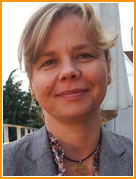
Ms. Iwona Maciejewska
iwonamaryla@gmail.com
Chief Operations Officer position in TES2A Europe Innovation Consulting S.L.
Senior Consultant in International R&D&I Projects (Spain)
|
TITLE: "European Collaborating R&D&i Program - EUREKA - FP7 and Horizon 2020"
ABSTRACT:
In order to give more complete picture of the European R&D&i initiatives, and so to allow the participants to evaluate which could be the most suitable option for their organisations, other programmes will be presented, such as Eureka. Not so known, could be an excellent tool to initiate development and innovation collaboration with Europe. In this context 3 Eureka’s pillars: Eurostars, Eureka clusters and Eureka umbrellas will be introduced.
FP7, finishing this year, will be followed by Horizon 2020 (2014-2020). The importance of international cooperation in science and technology is explicitly recognized in the European Union’s Innovation Union flagship initiative and the proposals for Horizon 2020, offering so more interesting challenges and opportunities for the associated and third countries. In this context an important feature of international cooperation, Association Agreements, will be also analysed.
ABOUT THE SPEAKER:
Born in Warsaw, studied MSc in Geography and Cartography from 1985 up to 1990 at the University of Warsaw, (UW) and Surveying Engineering from 1990 up to 1994 at the Polytechnic University of Catalonia, UPC, in Barcelona.
For more than 15 years (till 2010) she worked in Aurensis (nowadays Telespazio Iberica) as a Head of Digital Mapping and Remote Sensing Business Unit, being appointed for the last 2 years as a Coordinator of Innovation and International Knowledge transfer, mainly focused on European R&D&i programmes. At the same time she has been active in the field of high education giving lectures in GIS at UPC (1998-2000) and later on as a lecturer at “Fundamentals of Economics and Management of International Projects”, within “International MSc. in Airborne Photogrammetry and Remote Sensing” at Institute of Geomatics.
Since 2010 she is working as a Senior Consultant in international R&D&i projects and holds the Chief Operations Officer position in TES2A Europe Innovation Consulting S.L. Since the beginning of 2012 she is a Thematic Expert for “Improving Innovation and Knowledge Economy” in URBACT: European Sustainable Urban Development Programme.
She is an expert in European R&D&i projects, mainly Framework Programme, Eureka and JTIs, focusing on Smart Cities, ICT, energy, security, transport and eHealth sectors.

|
Dr. Chang-Won Ahn
ahn@etri.re.kr
Special Fellow of Electronics and Telecommunications Research Institute (ETRI),
(South Korea)
|
TITLE: "Korean Experience in European Collaborating R&D Program. Korean International R&D Collaboration Program."
ABSTRACT:
Korea has been a very active country beyond EU overcoming a long distance in terms of geography and language together. Korean successful story to build up a sound partnership with European R&D community will be introduced in this tutorial, too.
From the personal interests in European R&D collaborating programs, ETRI has shown up at ITEA2 Project Outline Meeting to create and/or join the European R&D project from 2007 and finally succeeded to jointly launch two R&D project, MANY and EASI-CLOUD in 2010. Even we suggested a new project idea ViSCa last year and could start it with successful funding.
We are going to introduce how to successfully get involved in EUREKA ITEA2 project and introduce our whole story about sharing project ideas, making a consortium, passing evaluation, funding project, and doing together.
ABOUT THE SPEAKER:
Dr. Chang-Won Ahn is a special fellow at Software Research Lab., ETRI. He is educated on Industrial Engineering, especially stochastic processes and queueing theory 1998 at KAIST (Korea Advanced Institute of Science and Technology) in Daejeon, South Korea and has more than 13 years of experiences in system SW technologies.
Since Mar. of 2009, he has led the R&D Project on the virtualization technologies, which mainly focus on the development of ViMo (Virtualization for Mobile) which is an ARM-supporting VMM (Virtual Machine Monitor) for the smart devices connected to a mobile cloud and and OpenVINE which is an open VM (Virtual Machine) management solution for a cloud computing infrastructure respectively.
Since July 2010, he has also been participating in EUREKA ITEA2 project applying virtualization technologies for the resource management of many-core system, which is collaborating with 13 organizations from 6 countries. Since Mar. 2012, he has been leading the R&D topic of “Big Data System” in ETRI.
TITLE: "How to Promote Innovation in ICT Sector in Developing Countries?"
ABSTRACT:
Many governments have recognized the key role of this exceptionally dynamic sector that enables economic development. Supporting the establishment of an innovative national ICT industry can notably contribute to economic growth, increase in exports, increase in investments, employment creation, competitiveness, branding and positioning This tutorial seek to address the following question: how to maximize the contribution of the innovation in the ICT industry in developing and emerging countries towards sustainable economic development and poverty reduction? In order to achieve this, the tutorial analyses the obstacles and factors impeding the competitive development of this industry including: specific structural problems of developing countries, challenges related to internationalization and export, and specifics of the ICT industry. The tutorial introduces a methodology and a set of practical tools to address these obstacles and promote innovation in the ICT industry in developing and emerging countries. The purpose is to: (1) Provide a practical guideline for designing and implementing projects for promoting the ICT sector, (2) Develop a specific methodology to enable effective, innovative and sustainable ICT sector promotion based on the practical experience of international development cooperation, (3) Elaborate concrete procedures, processes and tools to promote innovation in the ICT industry, (4) Provide advice on actions and measures to improve the international competitiveness of ICT sectors, (5) Provide best practices of ICT sector promotion in developing and emerging countries. The tutorial manual and toolbox provide a strategic “roadmap” for ICT sector promotion which can be flexibly adapted to accommodate future changes in resources, global markets and technologies.
ABOUT THE SPEAKER:
Professor Nader Nada is Researcher, Author, and International Lecturer. He is the founder of the underdevelopment Innovation and Entrepreneurship Center in Istanbul, Turkey. He received his PhD degree from George Mason University, VA, and his MS degree from Minnesota State University, MN. In 1991 he received the Achievement Award from the American Achievement Academy. He was NASA Fellow for three successive years for the design and implementation of the Earth Observation System (EOS), NASA’s largest global environmental information system.
Over the last 10 years he has consulted several governmental organizations such as the UAE Ministry of Education, Egyptian Ministry of Education, and The Academy for Healthcare Sciences in Egypt, Ihsander, Turkey. And he has trained a wide variety of governmental, large, and SMEs organizations in Egypt, Gulf states and Turkey
He published seven books (Two on Creativity and Innovation in industry) and over seventy journal and conference papers in the areas of his interest. He is the founder, chair, and speaker of several international conferences. In 2002, he joined the UAE National Committee on the Development of the Primary and Secondary Education (UAE Vision 2020) as Minster of Education ICT consultant and Chaired the UAE National Committee on Technology Education. In 2006 he has been assigned as an ICT consultant for the minister of education in Egypt. He is currently Professor Dr. at Fatih University, College of Engineering, Industrial Engineering Department, Istanbul, Turkey. He is currently Program Director of the Master of Science and PhD in “Innovation and Entrepreneurship”.
TITLE: "How to become an Oracle Certified Master."
ABSTRACT:
In this session I will give detailed informaiton on my own OCM preparation tips. The session is divided into 8 sections based on the OCM exam topics. During the session you will focus on how to use documentation, how to create your own practices and how use the time to solve different scenarios.
ABOUT THE SPEAKER:
Kamran Aghayev A. is an Oracle Certified Master, Oracle RAC Certifeid Expert, Oracle Certified Professional (9i,10g,11g), Oracle ACE Director and President of Azerbaijan Oracle User Group (AzerOUG) working at AzerCell TelecomLLC.
He is an author of the book “Oracle Backup and Recovery – Expert secrets for using RMAN”. He runs a popular blog http://www.kamranagayev.com where he shares his experience and contributes fairly regularly to newsgroups, forums, and user group meetings and events around the world.
Kamran is a frequent presenter at Oracle related conferences such as Oracle OpenWorld, OUGTH, TROUG and others. He also delivers a class about Oracle Database Administration.
|